
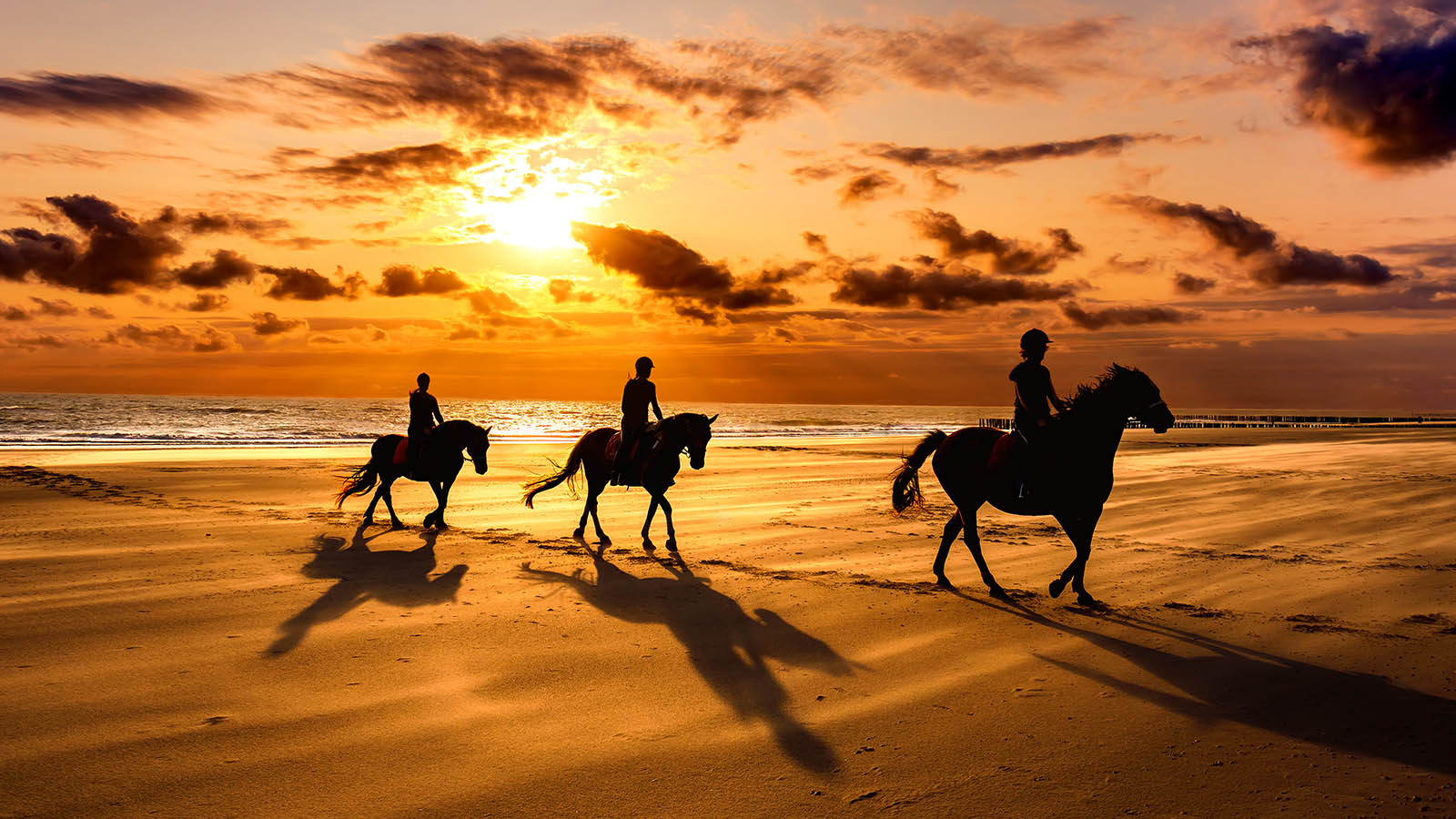
France offers a wide variety of landscapes and climates, from the Atlantic coast to the Mediterranean shores, from rolling countryside to high mountain ranges. For riders planning a horse-riding holiday, understanding these regional differences will help you prepare the right clothing and equipment for a comfortable and enjoyable stay.
A Country with Several Climates
Although France is not a very large country, it has four main climate zones:
- Oceanic climate (West and Northwest)
Regions: Brittany, Normandy, Atlantic coast- Mild temperatures year-round
- Frequent light rain and changing weather
- Summers are rarely too hot
- Winters are generally cool but not severe
Bring a waterproof jacket and layers. The ground may be soft or muddy after rain, especially in spring and autumn. - Continental climate (Central and Eastern France)
Regions: Burgundy, Alsace, Champagne, parts of the Rhône Valley- Warm to hot summers
- Cold winters, sometimes with frost or snow
- Clear seasonal differences
- In summer: light clothing, sun protection, and plenty of water
- In spring and autumn: layers for cooler mornings and evenings
- Mountain climate (Alps, Pyrenees, Massif Central, Jura, Vosges)
- Cooler temperatures than lowland areas
- Rapid weather changes
- Possible storms in summer
- Snow in winter and sometimes in early spring or late autumn
- Always carry a warm layer, even in summer
- A windproof or waterproof jacket is essential
- Good gloves are useful at higher altitudes
- Mediterranean climate (South and Southeast)
Regions: Provence, Languedoc, Côte d’Azur, parts of Corsica- Hot, dry summers
- Mild, sunny winters
- Strong winds at times (especially the Mistral)
- Summer: light, breathable clothing, sunscreen, and a hat for breaks
- Spring and autumn are ideal for riding with pleasant temperatures
Seasonal Overview
Spring (March–May)
- Temperatures: 10–20°C (50–68°F)
- Fresh, green landscapes and blooming countryside
- Weather can be changeable with occasional rain
Best for: scenic rides, mild temperatures, fewer crowds
What to bring: layers, light waterproof jacket
Summer (June–August)
- Temperatures: 20–35°C (68–95°F), sometimes higher in the south
- Long, sunny days
- Ideal conditions in mountains and coastal areas
Best for: mountain trails, beach riding, long daylight hours
What to bring: breathable riding clothes, sun protection, refillable water bottle
Autumn (September–November)
- Temperatures: 10–25°C (50–77°F)
- Beautiful autumn colours, especially in forests and vineyards
- Generally stable weather in early autumn
Best for: comfortable riding temperatures, quiet trails
What to bring: layers, light waterproof gear
Winter (December–February)
- Temperatures:
- Lowlands: 0–10°C (32–50°F)
- Mountains: often below freezing
- Snow in mountain regions
- Many areas remain suitable for riding on clear days
Best for: experienced riders, mountain or southern regions
What to bring: warm layers, thermal gloves, waterproof outerwear
Practical Tips for Riding Holidays
- Layering is key: temperatures can change quickly during a ride.
- Waterproof gear is recommended in most regions, especially outside summer.
- Sun protection is essential from late spring to early autumn.
- Check local forecasts before each ride, particularly in mountainous areas.
Ideal Riding Periods by Region
- Atlantic coast: May to September
- Central and eastern regions: April to October
- Mountains: June to September
- Mediterranean south: March to June and September to November
France offers year-round riding opportunities, with each region and season providing a different atmosphere and landscape. With the right preparation, you can enjoy comfortable and memorable rides wherever you choose to explore.